Newcastle is the northern-most end of the Sydney "conurbation" so I'll include it in my ramblings - plus it's relatively close-by to me and interesting. Newcastle had trams, like Sydney, and an airport close to its heart. Alas, a few near-misses and crashes plus the encroachment of housing saw the end of this convenient strip in 1963.
Where was it? District Park, Broadmeadow. Yep, right next to the railway. Perfect spot, really. Except for the houses. And the crashes, mostly during the 1940s. Famously a C47 over-ran the strip in bad weather and ended in the stormwater drain, and a Bristol Beaufort ended up breaching the fence. A USAF A20 Havoc (AKA Boston) also ended up nose-down on Lambton Rd.
Here's a Google Earth shot of it, as it is now, overlaid with an old black-and-white shot of the field, date unknown but I'm guessing it was 1940 or so:
If you look closely the trams ran along the right-hand (eastern) side of the field (ie Broadmeadow Rd) before crossing in reserved track along what is now Curley Rd and then Lambton Rd (southern end of the image), The tram line then went along Hobart Rd.
More soon!
Shops and services
Jargon-free PC Help
Quality tech products
Bike gear
Books, games, DVDs
Photography tips and tricks
My Most Popular Blogs
Photography tips and tricks
Alfa Romeo Tipo 116
My Opinion
Business, Opinion and Nonsense
Airliners
Business blogging
My Opinion
More Business blogging
Myths and legends
Photography
Photography tips and tricks
History
Sydney history
Bikes and bike racing
Bike racing
Bike racing for beginners
Bike racing 101
Doper's guide to bike racing
Cars - and Alfa Romeos
Alfa Romeo Tipo 116
GTVeloce Style
Wednesday, July 16, 2014
Can't resist this velodrome, can we? Camperdown!
Camperdown Velodrome is now gone. It's O'Dea Reserve, if you want to look it up.
From a "lost Sydney" perspective we have lost a velodrome, and before that we lost a brick pit, a tip and some factory waste. Before that the original custodians of the land lost their say in all of this, alas.
But anyway, you can search the Marrickville council records on this but in brief the enormous saucer (440m?) that was the 1938 Commonwealth Games velodrome (also lost!) at Henson Park, Marrickville was closed in the late 60s or thereabouts (check that, someone!) and the Dulwich Hill cycling club was assisted by council to move to a purpose-built if somewhat dicey and much smaller (250m) concrete track with proper banking.
It was bumpy, it had little or no curving between track and duckboard but it was proper!
FWIW I last rode the Henson Park track in about 1976, I think, before it was removed and replaced by impressively-bright TV-quality RL footy club floodlights for the benefit of the Newtown 'Bluebags'. Yes, we soon effectively lost the Bluebags as well, or at least lost them from first grade.
Alas the toxic waste fill was seeping out and council closed and remediated the Camperdown site. The cycling club moved to Tempe velodrome, a slightly bigger (330m?) but less scary beast, and Camperdown was left to rot for a while. And now it's gone.
My list of Sydney's race tracks and circuits.
or checkout my list of Sydney and surrounding airstrips and airports.
Labels:
Camperdown,
cycling,
Henson Park,
Marrickville,
velodromes
Tuesday, April 8, 2014
Gumbramorra swamp - the final word (for now)
It seems that there is some confusion over both Gumbramorra swamp and creek - where they were being the key question, both Marrickville and Sydenham being the alternative and competing "correct" answers. Some documentation clearly indicates that Sydenham is the preferred and most likely primary location but there's no doubt that another related, indeed connected swamp, one that inevitably fed into Gumbramorra, existed around Addison Road, Marrickville. As they were connected, most likely they could be considered "part of the Gumbramorra system" and most maps show this to be so. However it is also possible that in drier years the connection dried up, isolating the upper, Addison Road swamp. As it interests me, mainly 'cause I grew up in the area, I've gone into a bit more depth with this post. Wherever possible I have given credit for previous work. Where uncredited it's most likely just my opinion!
Anyway... firstly, what does Gumbramorra mean? I still don't have an answer to that!
OK, disappointing - but maybe someone will chip in one day and answer that one.
So, secondly, where do I think it was? I've written a detailed post on this already (drawing heavily on Chrys Meader's work, see that post for details) but in short it was hemmed in by foothills and escarpments to the north, east and northwest. That's incontrovertible, based on topography. It extended from the Cooks River mudflats and saltmarsh of Tempe, where the Gumbramorra Creek joined the Cooks River in the south, to a north-western extent along what is now Sydenham Rd. It possibly at its greatest extent reached west to Livingstone Road (both Sydenham and Petersham Roads were once and variously known as Swamp Road, so it likely extended some distance) but must have narrowed considerably as it expanded west. The northern and western edge was blocked by the rising land to the north, including that along Illawarra Road, forcing the swamp to form an edge at Sydenham Road around to Victoria Rd, and probably northwards as far as Enmore Park. That flat, easily flooded area to the south and east of today's Victoria Road is now industrial land and lies at the core of the swamp. Partly, to the south, it was once the location of the tragically flooded estate of Tramvale (1889).
The Addison Road swamp is a little higher and to the north and west of that, although it clearly doesn't take much imagination to see the two systems merging in wetter years. The Addison Road swamp visibly lies in a depression between two ridges, draining to the east at, around, or just to the south of Enmore Park. Whether the Addison Road swamp was permanently connected to Gumbramorra Swamp is possible, if unlikely. More likely the connection dried up periodically. They are certainly connected, related systems, obviously so during the wetter years and seasons. But it's a stretch to say that Gumbramorra Creek itself flowed through (or under, if you like) the current community centre (as has been claimed). It was a swamp, it didn't really "flow" but it drained slowly to the east. In any case Gumbramorra Creek lies to the south of the primary swamp in that narrowing around Carrington Road and clearly emptied into saltmarsh and mudflats at Cooks River. It's then a question of where to put the headwaters and to name any feeder creeks - to the north, northwest or west. And I have no definitive answer on that!
Anyway, Marrickville Council has had a stab at mapping it (reference 4. below), with attribution as an adaptation of Benson et al (1999)..
Whilst I tend to agree, it's worth noting that (as mentioned on the image above) the swamp could "double in size". Most likely it would expand along the path of current Sydenham Road and also north east towards St Peters. It should be remembered that it drains to the south, if somewhat slowly due to the narrowing egress, and that the topography further suggests that the core swamp is centred west and north of Sydenham. In a dry season or worse, a dry spell of years, the Addison Road swamp may well be cut off quite early on, being to the north of the primary swap. Similarly the narrowing to the south suggests also that the creek itself could slow or even stop, leaving the swamp in the main cut off from the Cooks River. We know it was tidal at the southern extreme, so salt water would have penetrated but would have been periodically flushed by fresh water rainfall. If Gumbramorra Creek were blocked after a dry spell then a sudden, drought-breaking deluge could well force the swamp to "back up" quite a distance before forcing itself to reopen the creek.
Which is all well and good - it would have been a wonderful system for wildlife - but today is little more than an interesting set of concrete-lined drains, historic pumping stations and a massive (often empty) outflow pond ('Sydenham Storage Pit'). As well as losing this swamp, we also lost the marshes at Mascot, in an impressive feat of drainage and, ultimately, destruction. If that's progress, can we at least learn from it and leave (or restore?) a bit more of the natural world in our over-built urban environment, please?
Some references and further reading:
I've been informed that there's a recent book by Sue Castrique that is declarative in asserting that the 'Addison Road creek' fed Gumbramorra swamp, running through the current Addison Road Community Centre (i.e. the Army camp, or market garden/dairy land which was thought to be drained swamp rather than a clearly defined 'creek') and crossing Victoria Road near Smith Street. This is (apparently) evidenced by an open canal south of Smith Street. Whilst certainly 'in the ballpark', previous work has stressed the cyclically varying (ie ephemeral) yet largely swampy nature of both the Addison Rd swamp and the sometimes contiguous and often linked Gumbramorra swamp. Rather than being a creek bed, it may simply be a convenient place for draining swampy land to the northwest of the Sydenham basin. The the Eastern and Empire Lane stormwater channels (the 'northern catchment') are close by, running in part under Marrickville Metro and Sydney Steel Rd. It's possible that Smith Street is indeed a remnant watercourse from the northwest. I haven't read the book so I'm not sure what evidence backs the claim up. It may simply be one of several ephemeral creeks that ultimately fed Gumbramorra, and the alignment may or may not be the "main channel" as it were, or simply the centre of a semi-permanent swamp.
Anyway... firstly, what does Gumbramorra mean? I still don't have an answer to that!
OK, disappointing - but maybe someone will chip in one day and answer that one.
So, secondly, where do I think it was? I've written a detailed post on this already (drawing heavily on Chrys Meader's work, see that post for details) but in short it was hemmed in by foothills and escarpments to the north, east and northwest. That's incontrovertible, based on topography. It extended from the Cooks River mudflats and saltmarsh of Tempe, where the Gumbramorra Creek joined the Cooks River in the south, to a north-western extent along what is now Sydenham Rd. It possibly at its greatest extent reached west to Livingstone Road (both Sydenham and Petersham Roads were once and variously known as Swamp Road, so it likely extended some distance) but must have narrowed considerably as it expanded west. The northern and western edge was blocked by the rising land to the north, including that along Illawarra Road, forcing the swamp to form an edge at Sydenham Road around to Victoria Rd, and probably northwards as far as Enmore Park. That flat, easily flooded area to the south and east of today's Victoria Road is now industrial land and lies at the core of the swamp. Partly, to the south, it was once the location of the tragically flooded estate of Tramvale (1889).
The Addison Road swamp is a little higher and to the north and west of that, although it clearly doesn't take much imagination to see the two systems merging in wetter years. The Addison Road swamp visibly lies in a depression between two ridges, draining to the east at, around, or just to the south of Enmore Park. Whether the Addison Road swamp was permanently connected to Gumbramorra Swamp is possible, if unlikely. More likely the connection dried up periodically. They are certainly connected, related systems, obviously so during the wetter years and seasons. But it's a stretch to say that Gumbramorra Creek itself flowed through (or under, if you like) the current community centre (as has been claimed). It was a swamp, it didn't really "flow" but it drained slowly to the east. In any case Gumbramorra Creek lies to the south of the primary swamp in that narrowing around Carrington Road and clearly emptied into saltmarsh and mudflats at Cooks River. It's then a question of where to put the headwaters and to name any feeder creeks - to the north, northwest or west. And I have no definitive answer on that!
Anyway, Marrickville Council has had a stab at mapping it (reference 4. below), with attribution as an adaptation of Benson et al (1999)..
Whilst I tend to agree, it's worth noting that (as mentioned on the image above) the swamp could "double in size". Most likely it would expand along the path of current Sydenham Road and also north east towards St Peters. It should be remembered that it drains to the south, if somewhat slowly due to the narrowing egress, and that the topography further suggests that the core swamp is centred west and north of Sydenham. In a dry season or worse, a dry spell of years, the Addison Road swamp may well be cut off quite early on, being to the north of the primary swap. Similarly the narrowing to the south suggests also that the creek itself could slow or even stop, leaving the swamp in the main cut off from the Cooks River. We know it was tidal at the southern extreme, so salt water would have penetrated but would have been periodically flushed by fresh water rainfall. If Gumbramorra Creek were blocked after a dry spell then a sudden, drought-breaking deluge could well force the swamp to "back up" quite a distance before forcing itself to reopen the creek.
Which is all well and good - it would have been a wonderful system for wildlife - but today is little more than an interesting set of concrete-lined drains, historic pumping stations and a massive (often empty) outflow pond ('Sydenham Storage Pit'). As well as losing this swamp, we also lost the marshes at Mascot, in an impressive feat of drainage and, ultimately, destruction. If that's progress, can we at least learn from it and leave (or restore?) a bit more of the natural world in our over-built urban environment, please?
Some references and further reading:
- Dictionary of Sydney on this subject: http://www.dictionaryofsydney.org/entry/sydenham
- Reasonable claim by Golden Barley Hotel to be at the head of the swamp: http://www.goldenbarleyhotel.com.au/history.html
- The Addison Road Community Centre also quite reasonably lays claim to be part of the Gumbramorra swamp: http://www.arcco.org.au/history/ but the claim about the creek location is less credible
- Marrickville Council has produced this booklet, 'Water Revolution', which includes a guesstimated map of the swamp. And again here for the Council's water strategy.
- A very good read by Sydney Water on the Carrington Road Pumping Station: https://www.sydneywater.com.au/SW/water-the-environment/what-we-re-doing/Heritage-search/heritage-detail/index.htm?heritageid=4571743&FromPage=searchresults and on Sydenham Storage Pit: https://www.sydneywater.com.au/SW/water-the-environment/what-we-re-doing/Heritage-search/heritage-detail/index.htm?heritageid=4571743&FromPage=searchresults
- Steam Tram rescue, 1889 flood: http://www.tramscrolls.com.au/2010/12/steam-tram-rescue/
- My previous post on Gumbramorra: http://sydneypast.blogspot.com.au/2011/12/gumbramorra-swamp-or-sydenham-if-you.html
- My previous post on Addison Road: http://sydneypast.blogspot.com.au/2009/12/addison-rd-centre-or-barracks-linked-to.html
- Local Land sales and more (my post): http://sydneypast.blogspot.com.au/2009/12/charles-street-marrickville-and_27.html
- My post on Marrickville history: http://sydneypast.blogspot.com.au/2009/12/charles-street-marrickville-and.html
- Another take on Marrickville History, by the local Heritage group: http://marrickville-heritage.blogspot.com.au/2012/10/marrickville-suburb-history.html
- My post on Cooks River history: http://sydneypast.blogspot.com.au/2010/06/some-snippets-of-history-lime-mills.html
- My post on moving Cooks River to make Sydney Airport (part 1 of a series): http://sydneypast.blogspot.com.au/2008/11/sydney-airport-part-1-1926-vs-1940.html
- And again, part 4: http://sydneypast.blogspot.com.au/2008/11/sydney-airport-part-4-1966-vs-1940.html
I've been informed that there's a recent book by Sue Castrique that is declarative in asserting that the 'Addison Road creek' fed Gumbramorra swamp, running through the current Addison Road Community Centre (i.e. the Army camp, or market garden/dairy land which was thought to be drained swamp rather than a clearly defined 'creek') and crossing Victoria Road near Smith Street. This is (apparently) evidenced by an open canal south of Smith Street. Whilst certainly 'in the ballpark', previous work has stressed the cyclically varying (ie ephemeral) yet largely swampy nature of both the Addison Rd swamp and the sometimes contiguous and often linked Gumbramorra swamp. Rather than being a creek bed, it may simply be a convenient place for draining swampy land to the northwest of the Sydenham basin. The the Eastern and Empire Lane stormwater channels (the 'northern catchment') are close by, running in part under Marrickville Metro and Sydney Steel Rd. It's possible that Smith Street is indeed a remnant watercourse from the northwest. I haven't read the book so I'm not sure what evidence backs the claim up. It may simply be one of several ephemeral creeks that ultimately fed Gumbramorra, and the alignment may or may not be the "main channel" as it were, or simply the centre of a semi-permanent swamp.
Labels:
Addison Road,
Cadigal,
Cooks River,
gumbramorra. swamp,
Sydenham
Tuesday, February 18, 2014
I'm still here, I assure you
Sometimes it's by the skin of my teeth but I am still here, promise!
More soon.
That's another promise.
Rob.
More soon.
That's another promise.
Rob.
Tuesday, March 5, 2013
Alcon bicycles from Marrickville
My father passed his (I guess) mid-to-late1940s-era Alcon road bike onto me and later I (lamentably) passed it on as a trade-in on another bike at Mick Mazza's shop in Illawarra Rd, Marrickville. Now I realise that the bike was probably made just a kilometer or so away from where we lived and that Mick Mazza had a hand in selling the brand, albeit perhaps a few years later. Anyway, the story as I see it... with links....
Alcon circa 1930 bicycle drive detail 76_912 - Sydney Cyclist
Oh, worth mentioning that the "Alcone" brand is from the Connolly line as well. It seems to have been the racing or premium frame.
Some images of 'my' Alcon, hopefully still out there in the wild...
Alcon circa 1930 bicycle drive detail 76_912 - Sydney Cyclist
Alcon circa 1930 bicycle drive detail 76_912Alcon circa 1930 bicycle drive detail 76_912 - Sydney Cyclist
My first bike... 2 gear ratios, just flip the wheel around to change gear... perfect! (with photos)
Assume when you say 'Alcon' the frame was made by Bill Connolly of Victoria Rd, Marrickville. If so, not sure if the frame dates back to 1930. Bill was born in 1917 (give or take a couple of years) so doubt if he had his own business at 13. Believe he started making frames from 1943.BNA - Australian Cycling Forums • View topic - 1948-ish Alcon
Alcon was set up at 312 Victoria Road, Marrickville in about 1948 by Alvia Mervyn Connolly (1918-1974), who (unsurprisingly) preferred to be known as Bill Connolly. Connolly was a former bike racer who was building bikes (employer unknown) by 1943. Alcon derives directly from his name, ALvia CONnolly. I understand that Mick Mazza was associated with Alcon and sold Alcon bikes. As best I can work out the Alcon name disappeared with Bill Connolly's death.BNA - Australian Cycling Forums • View topic - 1948-ish Alcon
My uncle Alvia (Bill) Connolly made Alcon bikes. I remember visiting him at Marrickville lots of times when I was a small girl.with my father Ron Connolly who was Alvia's older brother. In factBNA - Australian Cycling Forums • View topic - 1948-ish Alcon
my brother & I were given custom made Alcon bikes as a Xmas surprise one year. Memories of a workshop with Lionel Cox's
poster on the wall & an Uncle who was always covered in grease. I also remember a cart made out of bicycle parts was pulled around by his Great Dane dog. He also made bikes for Russell Mockeridge. Many happy times were spent at his house with his wife Mary.
My father is Raymond Connolly... nephew of Alvia Connolly. He was telling me about reading your post on this site and sharing many of the same memories as you, especially the huge dog! Cycling has been, and still is, a huge part of his life. I know he would love to catch up with you if possible. Please contact me if you are interested. Thanks, Gemma Currey (nee Connolly)And so on.... I threw the last one in because I Have Curreys in my family tree... probably no relation but anyway...!
Oh, worth mentioning that the "Alcone" brand is from the Connolly line as well. It seems to have been the racing or premium frame.
Some images of 'my' Alcon, hopefully still out there in the wild...
My list of Sydney's race tracks and circuits.
or checkout my list of Sydney and surrounding airstrips and airports. Wednesday, February 20, 2013
Secrets, Sydney's airports and the Central Coast
Yes, I live on the Central Coast, but I grew up in inner western Sydney right under the flightpath to what became the main, longest runway. I loved it. My mother hated it. Of course she had earlier moved from Kogarah (which was under what was then the main runway's flightpath) to Marrickville when it was affected only by the "second", less used runway. And before the jet era, anyway. But they grew that short, secondary runway into the bay, an eminently sensible option in many respects, didn't they?
Of course the noise could be horrendous - and isn't much better now, even if high-bypass engines are demonstrably quieter and cleaner. And back then planes were smaller, so there were more of them at peak times. But now they are larger but quieter, which somehow sounds good on paper but in reality is as bad as ever. But they bought out the worst affected homes and insulated others, too. So "bearable" may suffice, if you like.
Anyway, point is that it's been there - Sydney Airport - since a certain Mr Love turned some distant Sydney swamp into an airfield not long into the 20th century. The runways were grassed and switched around a bit over the years, but it wasn't a problem for the locals, really, as it was just a swampy area fit only for pony racing, golf courses and industry (at least to a developer's eyes). When international air travel began to take off it was from Rose Bay, not Mascot. Flying boats were the long-haul heavy-lifters of their day. What happened next however is that Love's Mascot airfield slowly grew and so did the surrounding suburbs. And when the flying boats boomed then declined after the second world war Sydney's major air traffic needed to shift to the land - and thus the chickens came home to roost.
Traffic of course grew and runways became fixed - and longer. Aircraft now flew in and out over those growing suburbs to the west and the golf courses to the east. Until suddenly 747s arrived with larger payloads and longer runway requirements. Hence the focus shifted to the short north-south runway which was lengthened substantially into the bay. And then a parallel runway to that was built as well. But well before all of that came to pass various plans were put forward for a "second" Sydney Airport. Indeed there were studies galore.
In the 1970's it was proposed that the Central Coast could well be the right site for a second airport (although in truth there have always been many more airfields in Sydney than just one, indeed Bankstown Aiport has regularly exceeded Sydney in air movement volumes) and a lumpy, foggy and expensive Somersby site was seriously considered, amongst others. But political will was weak and impetus was lost until finally the Badgery's Creek site was selected in western Sydney. Or so we thought. In fact it stalled. And we are left here, decades later, with just the one "main" domestic and international airport at Mascot. Which suits the commercial airport operator just fine, of course, and keeps things simple for airlines and passengers, too. (There's no confusion over which airfield is which, for example, and no expensive transfer to distant termials to change flights.)
Of course Sydney AP could stay "as is" for decades, anyway, or even grow further into the bay. But the wheels are still turning on a "second" airport - if slowly - and Badgery's - or is it Wilton? - may one day come to be. But that doesn't stop the odd proposal for a regional airport that could siphon off some Sydney air traffic, just like Newcastle airport does today but moreso. It's not a "second Sydney airport" like the beat-up kings at The Telegraph would have us believe but a serious regional airport that would - if allowed to proceed - attract many northern-dwelling Sydney-siders looking for an easier way to fly within Australia. It would be an economic boon to the Central Coast and make interstate air travel more attractive to many, getting more cars off the roads. But it will get tarred with the usual brush, of course, and is almost certainly doomed.
Council's airport fibs put region in tailspin | thetelegraph.com.au
Of course the noise could be horrendous - and isn't much better now, even if high-bypass engines are demonstrably quieter and cleaner. And back then planes were smaller, so there were more of them at peak times. But now they are larger but quieter, which somehow sounds good on paper but in reality is as bad as ever. But they bought out the worst affected homes and insulated others, too. So "bearable" may suffice, if you like.
Anyway, point is that it's been there - Sydney Airport - since a certain Mr Love turned some distant Sydney swamp into an airfield not long into the 20th century. The runways were grassed and switched around a bit over the years, but it wasn't a problem for the locals, really, as it was just a swampy area fit only for pony racing, golf courses and industry (at least to a developer's eyes). When international air travel began to take off it was from Rose Bay, not Mascot. Flying boats were the long-haul heavy-lifters of their day. What happened next however is that Love's Mascot airfield slowly grew and so did the surrounding suburbs. And when the flying boats boomed then declined after the second world war Sydney's major air traffic needed to shift to the land - and thus the chickens came home to roost.
Traffic of course grew and runways became fixed - and longer. Aircraft now flew in and out over those growing suburbs to the west and the golf courses to the east. Until suddenly 747s arrived with larger payloads and longer runway requirements. Hence the focus shifted to the short north-south runway which was lengthened substantially into the bay. And then a parallel runway to that was built as well. But well before all of that came to pass various plans were put forward for a "second" Sydney Airport. Indeed there were studies galore.
In the 1970's it was proposed that the Central Coast could well be the right site for a second airport (although in truth there have always been many more airfields in Sydney than just one, indeed Bankstown Aiport has regularly exceeded Sydney in air movement volumes) and a lumpy, foggy and expensive Somersby site was seriously considered, amongst others. But political will was weak and impetus was lost until finally the Badgery's Creek site was selected in western Sydney. Or so we thought. In fact it stalled. And we are left here, decades later, with just the one "main" domestic and international airport at Mascot. Which suits the commercial airport operator just fine, of course, and keeps things simple for airlines and passengers, too. (There's no confusion over which airfield is which, for example, and no expensive transfer to distant termials to change flights.)
Of course Sydney AP could stay "as is" for decades, anyway, or even grow further into the bay. But the wheels are still turning on a "second" airport - if slowly - and Badgery's - or is it Wilton? - may one day come to be. But that doesn't stop the odd proposal for a regional airport that could siphon off some Sydney air traffic, just like Newcastle airport does today but moreso. It's not a "second Sydney airport" like the beat-up kings at The Telegraph would have us believe but a serious regional airport that would - if allowed to proceed - attract many northern-dwelling Sydney-siders looking for an easier way to fly within Australia. It would be an economic boon to the Central Coast and make interstate air travel more attractive to many, getting more cars off the roads. But it will get tarred with the usual brush, of course, and is almost certainly doomed.
Council's airport fibs put region in tailspin | thetelegraph.com.au
Wyong mayor Doug Eaton last month accused the media of a beat-up after The Daily Telegraph reported the council's plans for a second Sydney airport. "The key words here are 'regional airport'," he wrote in his weekly local newspaper column.Here is an updated list of Sydney's airports.
"The Sydney media have built it up to be our grab for Sydney's second airport.
"But all we ever proposed was a single runway, type 3 regional airport, similar to Coffs Harbour or Port Macquarie."
Mr Eaton has repeatedly stated it was meant to be a small regional airport despite the proposal featuring a 2600m-long runway, which would make it the second longest runway in NSW behind Sydney's main runway and capable of accommodating international flights.
Yarramalong resident Laurie Eyes, who lodged the GIPA request, said Mr Eaton and the council had been caught out in a "bare-faced lie".
Back-peddling yesterday, Mr Eaton said he strongly refuted claims he or the council misled the public in that the proposal started out as a push for a second airport.
Monday, December 3, 2012
Bondi Beach once had a dedicated tramway...
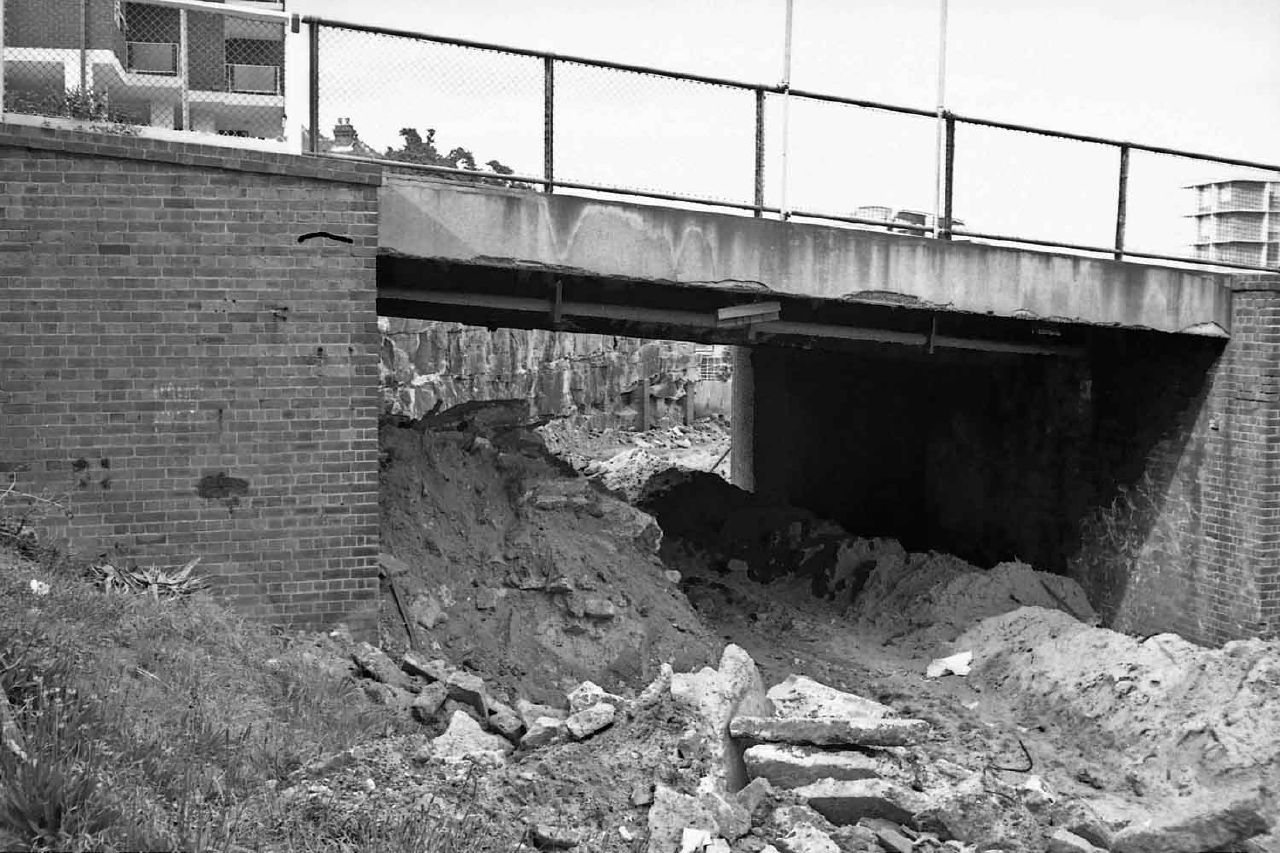
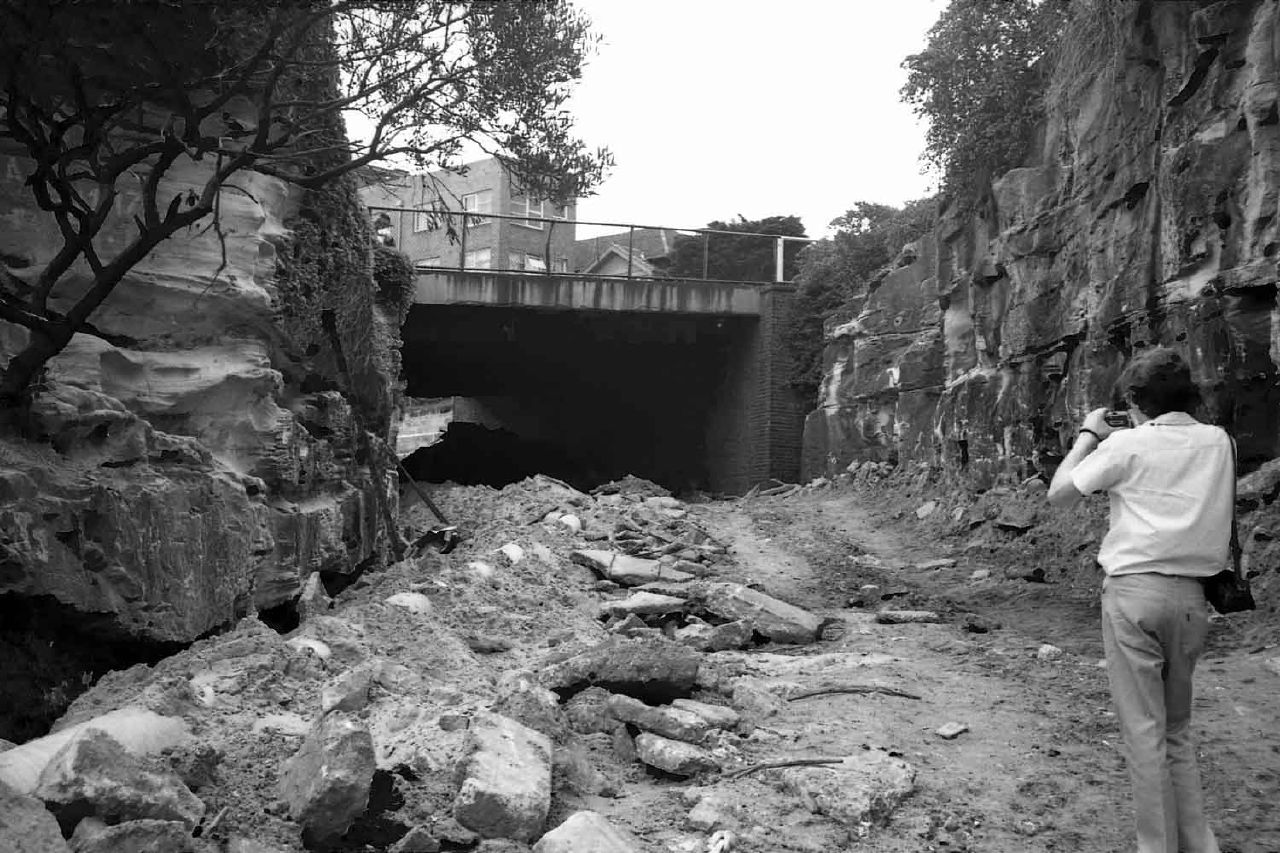
...with cuttings and bridges and curves.... and now we have buses and cars. Oh well. And the tramway reservation? Gone. Filled in. Some of it became park, some sold off to developers. Like a lot of Sydney's reserved track, just gone.
Here are some snaps I took in the mid-70s when the in-filling was taking place...
Saturday, November 3, 2012
Victoria Park gets another mention
Nice potted history of "Victoria Park". I haven't seen mention before of a motor racing connection, but the rest rings true.
Transport the key issue as newest suburb nears completion
The name, Victoria Park, was taken from the racecourse, used for both horse and motor racing, that existed on the site for the first half of the 20th century. In 1950 it was bought by Sir William Morris, the 1st Viscount of Nuffield, to assemble Morris Minor and Morris Oxford cars. By the time Leyland Australia took control of the site in 1970 it was the biggest car plant in the southern hemisphere and operated as such for just five years longer before closing down.
Before redevelopment the large warehouses on the site had been used by the federal government as a naval stores depot.
My list of Sydney's race tracks and circuits.
or checkout my list of Sydney and surrounding airstrips and airports.
Labels:
racecourse,
Rosebery,
Suburbs of Sydney,
Victoria Park,
Zetland
Saturday, July 28, 2012
After 50-odd years of neglect, Rozelle tramsheds to turn into shops?
I can't quite picture it, but there you go. After more than 50 years of lying idle, unless you count being a storage for vandalised trams and what-not as 'activity', the Rozelle tramsheds will become shops. It's not the first, of course, with the North Sydney tramsheds already doing long-time similar duty, and the huge South Dowling Street depot now a 'super centre'.
The article quoted below doesn't mention what happens to the tram cars and other material stored therein (assuming they are still there). And it's somewhat ironic that these tramsheds and allied housing are somehow being twisted into a green initiative that will reduce reliance on private cars... yes, knock down old transport infrastructure and build some shops. That won't encourage car use, will it? Especially not with an expense of gravel and asphalt laid in the yard outside, perfect for parking.
If you are quick you might get down there and possibly spot some old tram rails. There is an old tram bridge or 2 not far away, too. As for the lost heritage of the Harold Park site and the neighbouring stables spread as far as Newtown, well, that's progress.
The paceway that became a suburb | thetelegraph.com.au
The article quoted below doesn't mention what happens to the tram cars and other material stored therein (assuming they are still there). And it's somewhat ironic that these tramsheds and allied housing are somehow being twisted into a green initiative that will reduce reliance on private cars... yes, knock down old transport infrastructure and build some shops. That won't encourage car use, will it? Especially not with an expense of gravel and asphalt laid in the yard outside, perfect for parking.
If you are quick you might get down there and possibly spot some old tram rails. There is an old tram bridge or 2 not far away, too. As for the lost heritage of the Harold Park site and the neighbouring stables spread as far as Newtown, well, that's progress.
The paceway that became a suburb | thetelegraph.com.au
Under the master plan, 3.8ha of the 10.63ha site will be hived off as public open space and parklands along the Harbour foreshore.
The heritage-listed but dilapidated 1904 Rozelle Tram Sheds will also be restored and given new life as retail space.
"The Rozelle Tramsheds will be the gateway to Harold Park," said John Carfi, Mirvac CEO Development Apartments.
"The heritage significance of these magnificent buildings will be restored and the space transformed into a vibrant retail and commercial hub which will include dedicated space for community facilities."
Labels:
Forest Lodge,
Harold Park,
Lillie Bridge,
Newtown,
Rozelle,
trams
Friday, April 20, 2012
Sydney by Street Directory - c. 1920-1940 - a video
This is what happens when I spend some time with my old Sydney street directories, a camera and a video editor... this is the full version, there are shorter ones on my youtube channel.
Thursday, December 15, 2011
Gumbramorra swamp, or Sydenham if you like
I know Gumbramorra swamp quite well. It's dry, heavily paved and filled with factories. Plus the odd house or 3. When it rains, however, the swamp rises fast and floods Sydenham and Victoria Roads to car door-level in places. You get a bow-wave effect as you drive through it. I know this because a storm flooded this area in '79 and knocked out the electricals on my VW Golf. That sort of thing - stuck fast in a temporary lake - sticks in your mind.
It wasn't always exactly so developed and the story is interesting, so here are some links and quotes.
Quoted sections via Chrys Meader, 'Sydenham', Dictionary of Sydney, 2008, http://www.dictionaryofsydney.org/entry/entry/sydenham, viewed 15 December 2011
Sydenham
Sydenham
Of course it got developed, we know that, but surprisingly it was for cheap housing at first... until disaster struck.
Sydenham
And to quote my own work...
Alexandra canal | Out out damned Blog!
View Larger Map
Zoom into the centre to see the industrial area for a rough approximation of the swamp's extent. West from Sydenham Railway Station along Sydenham Rd to Enmore road is dead flat but rises to a ridge along the east (Tempe to St Peters) with a gentler rise to Marrickville Road to the south and higher land to the north and west. Addison Rd swamp is to the north west. There are plenty of drains in evidence if you look hard and the heritage-listed pumping station and pit lies between Sydenham and St Peters stations.
Gumbramorra Creek flowed into Cooks River to the south of the creek, so I expect the original course is along or near Carrington Road, where a steam-driven pumping station was sited.
View Larger Map
More soon, I promise.
It wasn't always exactly so developed and the story is interesting, so here are some links and quotes.
Quoted sections via Chrys Meader, 'Sydenham', Dictionary of Sydney, 2008, http://www.dictionaryofsydney.org/entry/entry/sydenham, viewed 15 December 2011
Sydenham
Most of the western half of Sydenham was within the Gumbramorra Swamp, a local Aboriginal name, which provided an effective boundary for the early European land grants. The majority of Sydenham stands within Thomas Moore's Douglas Farm, granted in 1799. Thomas Moore was one of the largest landowners in the area.What else would you give an ex-con but a swamp? It certainly looked different back then:
Another grant of 30 acres (12.1 hectares) was made in 1799 to emancipated convict, John Fincham but it was virtually useless land as it was entirely contained by the swamp.
Sydenham
The Gumbramorra Swamp emptied into the Gumbramorra Creek and then into Cooks River. Part of Sydenham and the suburbs of St Peters and Tempe developed to the south east of the swamp and the suburb of Marrickville to the west of it. Gumbramorra Swamp consisted of marshland at the foot of the declining sandstone and shoal ridges of Marrickville, in a relatively narrow area surrounded by low hills. At the mouth of the Gumbramorra Creek were mudflats, which were also evident in the swamp itself. Behind these mudflats and mangroves was the characteristic salt marsh. These conditions supported abundant wildlife. The Gumbramorra Swamp was a good source of food for the Aborigines.I think that should be "sandstone and shale" ridges, by the way. I can imagine it, the low hills with dry sclerophyll eucalypt forest giving way to casuarinas followed by fresh-water mangroves and mudflats in a narrow strip along Sydenham (previously Swamp) Road. Given that it was elevated above the Cooks River it was in effect a large hanging swamp, with another such smaller swamp above it around Addison Road, Marrickville. It would indeed have risen and fallen with La Nina/El Nino events but afforded some sort of regular food and freshwater supply most times. It's hard to believe that now, of course. It basically looks very drab and industrial in the most part.
Of course it got developed, we know that, but surprisingly it was for cheap housing at first... until disaster struck.
Sydenham
In 1881 the tramway was constructed along the western boundary of the swamp, now Victoria Road. Part of the original line for the tramway was laid down in the swamp as an incentive to development.And the fix was to make it industrial land only (for the most part, as some houses were built later). A pumping station was also built in Carrington Road and later the stormwater system of drains and pits was constructed. One such drain runs parallel with Sydenham Road and intrepid adventuring school kids have attested to its easy traverse to Sydenham. They can probably also attest to blind panic during flash floods after summer storms.
The Tramvale subdivision was then offered for sale in 160 lots with double frontages. The subdivision targeted the working class, stressing the availability of employment within 'a centre of a manufacturing district' with a 'certainty of a rise in value'. The estate was badly designed, afflicted with regular flooding and poor drainage. It lacked basic sewerage facilities. Tramvale was notorious for its stench, which the breeze carried all the way to nearby Marrickville, St Peters and Tempe. Its inhabitants also suffered from a range of diseases, including typhoid fever. In summer the mosquito plagues reached epidemic proportions.
The stressed owners of Tramvale would never see a return on their investment. After five days of heavy rain in May 1889, Cooks River flooded and the water rushed up Gumbramorra Creek and into the swamp. Tramvale was the worst hit, with residents having to be rescued as their homes went quickly under water. There was a public outcry and questions were raised in the NSW Parliament about the ethics of developers who sold cheap land, which was both unhealthy and subject to regular flooding, to working-class people, who would never be able to resell.
And to quote my own work...
Alexandra canal | Out out damned Blog!
The principal access roads to the Marrick village were Illawarra Road, a narrow track running south and Swamp (later called Sydenham) Road, running from the west to the south-east. A western track ran from Parramatta Road through Petersham and downhill to link up to Swamp Road, later becoming Petersham Road, and another (again from Parramatta Road) became Livingstone Road. To the south (on higher ground) was another track which became the present Marrickville Road. As now, it ran from current New Canterbury Road to the swampland at Sydenham. Crucially, it connected all the north/south tracks in an east/west fashion and came into its own when the trams were routed down Victoria Street (Road) and the Bankstown railway line came into being.The general area, courtesy Google Maps.
Another Council document on the History of The Gumbramorra Swamp is worth a look, especially this extract: “early settlement of the upland areas naturally impinged on the swamp. Since much of the region was given over to grazing and timber-getting, the edges of the Swamp served a useful purpose to the inhabitants who worked the later Wardell estate. The existence of habitation on both sides of the Swamp encouraged some traffic across. By the 1840s, a track, and then a road, ran across the swamp to Unwin’s Bridge Road. This ‘Swamp Road’ is Sydenham Road“.
And “in 1855 the 60 acre estate of Thomas E Chalder, called Marrick, was subdivided. It became the village named Marrickville (1861) and the centre of the municipality. The village remained small, with only the minimum of community services. It was bounded, generally, by Illawarra Road, Chapel St, Fitzroy St and Sydenham (Swamp) Road and was in the vicinity of the north-western section of the Swamp. The construction of the tramway along Victoria St, the principal north-south route on the western side of the Swamp, in 1881 promoted settlement in the district at a time of large-scale suburban expansion. At the same time, plans for the Illawarra Railway (opened 1884) concentrated on the eastern side of the swampland, adjacent to Unwin’s Bridge Road. The Swamp area was no longer a relatively isolated and neglected sector.”
Sydenham railway station (on the Illawarra line) was originally Marrickville Station, renamed when today’s Marrickville station, closer to the intersection of Illawarra and Marrickville Roads, was established.
View Larger Map
Zoom into the centre to see the industrial area for a rough approximation of the swamp's extent. West from Sydenham Railway Station along Sydenham Rd to Enmore road is dead flat but rises to a ridge along the east (Tempe to St Peters) with a gentler rise to Marrickville Road to the south and higher land to the north and west. Addison Rd swamp is to the north west. There are plenty of drains in evidence if you look hard and the heritage-listed pumping station and pit lies between Sydenham and St Peters stations.
Gumbramorra Creek flowed into Cooks River to the south of the creek, so I expect the original course is along or near Carrington Road, where a steam-driven pumping station was sited.
View Larger Map
More soon, I promise.
Labels:
Cooks River,
Marrickville,
Suburbs of Sydney,
Sydenham
Wednesday, November 16, 2011
Rose Bay flying boat base - Sydney's other International Airport
Or the real Sydney International Airport, if you like. Image somewhat re-processed of course. You can see a 'boat in there somewhere....
Worth a read:
Or here is an updated list of Sydney's airports.
Worth a read:
- "Golden Age of Flying Boats"
- RAAF Rathmines - flying boats on Lake Macquarie
- One of my Rose Bay posts
- Short Sandringham at Rose Bay
- Another Short Sandringham shot!
Or here is an updated list of Sydney's airports.
Monday, June 27, 2011
Kensington Racecourse: Wilson's 1926 directory
Last one on Kenso, and it's the racecourse that became a university - of NSW, to be precise. Kensington racetrack was a pony course adjacent - probably too close - to the Randwick horse racing track. Randwick won out politically and the Kensington ponies were shifted south to Ascot (or Mascot, if you like). The Old Tote building became a theatre under NIDA and the rest of the land became the UNSW.
There are also some interesting tram formations on this 1926 map, including the Dacey Ave line and the loop on the other side of Anzac Parade from the racetracks.
View Larger Map
There are also some interesting tram formations on this 1926 map, including the Dacey Ave line and the loop on the other side of Anzac Parade from the racetracks.
View Larger Map
My list of Sydney's race tracks and circuits.
or checkout my list of Sydney and surrounding airstrips and airports.
Kensington, Heffron and Randwick: Wilson's 1926
Lots of changes here since 1926. Long Bay Road becomes today's Malabar Road and the trams have gone, of course. What is now Heffron Park is not yet split by Fitzgerald Ave and plenty of houses are missing. Also the old Randwick rifle range has yet to shrink or lose its tram link (along Araluen Street, below).
View Larger Map
View Larger Map
Sunday, June 26, 2011
Long Bay: Wilson's 1926 street directory
Nice advert for a dream home in Randwick... wonder if that house still exists?
Also noted is the tram line up Perry Street, right onto Bunnerong Road, keeping well to the left before crossing the road onto the right side and finally enjoying some reserved track. I guess the road traffic was fairly light in any case but it seems odd to cross sides like that....
St Peters: Wilson's 1926 street directory
Note 'King Street' for today's Princes Highway, the dam at the Cooks River and the cricket ground on King St near Station Street. Also the advert for lime from kilns on Canal Rd is interesting.
Labels:
maps,
Marrickville,
Newtown,
St Peters,
street directory
Thursday, June 9, 2011
An interesting historical note about Narara, the sunken steamer off Barrenjoey - not the suburb. Or is it?
A snaky tale of ships and sea... well, in part, anyway. In summary, "Narara" appears to mean "black snake" in local Aboriginal language and it is a name that has adorned a ship that sank off Barrenjoey as well as the Gosford suburb. I note that Wikipedia hasn't updated its spelling of Barrenjoey since 1909... perhaps that is the preferred spelling?
Narara (ship) - Wikipedia, the free encyclopedia
Narara, New South Wales - Wikipedia, the free encyclopedia
Narara (ship) - Wikipedia, the free encyclopedia
The Narara was a wooden carvel screw steamer built in 1900 at Jervis Bay, that was wrecked when it sprang a leak whilst carrying general cargo between Sydney and the Hawkesbury River and was lost at 2 ml SE off Little Reef Newport near, Barranjoey, New South Wales on the 29 May 1909. The vessel commenced her runs from Sydney Harbour to the Hawkesbury River in January 1900 and continued on this run till the time of her final 1909 sinking. During 1903 the vessel was burned to the water line and sank at its mooring only to be refloated and rebuilt and started back on the same run.
Narara, New South Wales - Wikipedia, the free encyclopedia
The name 'Narara' can be traced back to the local Aboriginal term for 'black snake', which appears on the official emblem of Narara Valley High School and the scarf of 1st Narara Scout Group.[1][2]
Narara, New South Wales - Wikipedia, the free encyclopedia
Narara largely consisted of orchards and small mixed farms. Water from the small dams that used to be accessible from Narara Creek Road was piped in wooden piping across Narara Creek to the Railway station to supply steam trains. The dams were also a popular swimming spot especially when the ladder and walkway still existed on the lower dam wall.
Sunday, May 8, 2011
Bo Diddley plays Henson Park, 1976
The legendary Bo Diddley once played Henson Park in Marrickville, NSW using a local backing band (whose name escapes me..! ). Support was Jeff St John and the Silver Studs, MC was Donnie Sutherland. I believe it was 1976. Luckily enough I was there to take these blurry pics...
FYI Henson Park was a rugby league football ground and before that a cycling velodrome and key venue for the 1938 Empire Games. It wasn't usually a rock venue....
Wednesday, April 27, 2011
Where Qantas hid its DC4 fleet
It must have been a tad embarrassing as well as expensive (and arguably romantic, in a way) for Qantas to have to maintain such old aircraft well into the jet age.
Between trips to Norfolk Island's short grass strip the old birds were maintained in the hangars furthest from any passenger terminal but plainly visible to anyone driving from the domestic terminals to the "new" international terminal on the far side of the airfield. It was semi-hidden but by far the most interesting part of Sydney Airport in the 1970s...
Air transport in the 70s: QF DC4, 1977
Perhaps even more surprising than seeing big 4-engined turbo-prop L188 Electras flying into Sydney Airport in the 1970s was seeing (and hearing!) these 4-engined piston and prop-driven Douglas DC4 airliners in regular service from Sydney to Norfolk island!
They would often appear on the distant horizon to the east and north of where I was at Marrickville and lumber their way onto a short final approach to runway 16, making a left turn late over Sydenham. Presumably they were a slow-moving nuisance for the faster jets and were "hurried up" by air traffic control.
Subscribe to:
Posts (Atom)